
Cartridge Filling: Where Precision, Process Control, and Experience Matter
What Makes Sterile Cartridge Filling Different?
Cartridge-based drug delivery is becoming increasingly important for large-volume injectable therapies, particularly in on-body delivery systems and autoinjectors.
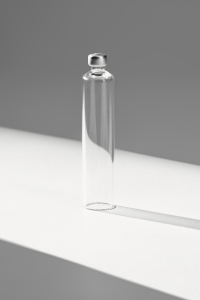
While cartridges offer advantages for patients and drug developers, they also introduce unique manufacturing challenges. Cartridge systems have their own tolerances, component interactions, and stopper considerations that must be carefully controlled throughout development and manufacturing. Within a Grade A isolator, pre-sterilized cartridges can be used along with automated debagging and delidding, robotic handling, nest transfer, aseptic filling, and stoppering.
Understanding where the process can become vulnerable and addressing those vulnerabilities early is critical to producing a consistent, high-quality drug product.
The Challenge: Cartridge Stability and Stoppering
One of the biggest technical challenges in cartridge filling is maintaining consistent cartridge positioning during dosing and stoppering.
Unlike some vial filling configurations, cartridges are frequently handled in nested formats where portions of the cartridge extend above the nest. This can create instability as the nest moves through the filling system and approaches the dosing and stopper stations. This matters because even small positioning variations can affect the consistency of the filling and stoppering process.
The stoppering operation is particularly important because an improperly controlled stopper can create solution-on-stopper (SOS) defects. If a stoppering tube dives too deeply into the solution or drives the stopper into the product, drug solution can end up on the stopper. That seemingly small defect can have much larger consequences for product quality, equipment performance, and batch disposition.
How to Address Stability and Stoppering
Establishing consistent stopper position and fill accuracy before GMP production is central to successful cartridge manufacturing.
CDMOs cannot assume equipment will perform as expected, even with technological advances. Approaching cartridge filling with an emphasis on challenging the process during development helps take away assumptions.
The objective is to identify variability during development, when it can be addressed, rather than allowing an issue to emerge during GMP production. Challenge equipment beyond standard original equipment manufacturer (OEM) testing. Draw on team members’ expertise in cartridge filling, both vacuum-assisted and mechanical stoppering. Hold frequent in-process checks to monitor critical attributes, including stopper tilt, stopper depth, and headspace. Issues may arise, and this way you will be prepared to address them before drug product is involved.
The Challenge: Tight Tolerances Leave Little Room for Error
Cartridge filling tolerances can be less forgiving than syringe filling.
This makes equipment setup and component alignment especially important. Misalignment between the cartridge, nest, filling components, and stoppering equipment can lead to excessive downtime, equipment damage, or defective units.
Fill volume is another important consideration.
Tight fill volume requirements are assessed during product onboarding and process development. Tubing and needle configuration are selected based on the product’s characteristics. A high-viscosity formulation, for example, may require larger tubing, while a low-viscosity product may require a smaller needle. More challenging formulations may require specialized fluid-path configurations.
This is where process knowledge becomes particularly valuable. The filling system must be developed to ensure repeatable dosing and consistent stopper placement.
How to Address Tolerances and Filling Accuracy
Fill accuracy directly affects the amount of drug delivered to the patient. Filling variations can result in underdosing or overdosing, creating a direct patient-safety concern. Teams must understand and control process variations early. Manufacturing production issues can lead to nonconformance reports (NCRs), additional qualification and process performance work, or increased labor and manufacturing costs.
Development studies during product onboarding and technical transfer can help establish consistent filling performance before moving into GMP production. In-process checks are deployed alongside development-stage dosing studies to demonstrate consistent fill accuracy.
Working closely with equipment manufacturers is key to ensuring the appropriate change parts are delivered, recipes are created correctly, and the process is developed around the specific product and equipment. From there, MSAT, operations, and validation teams work together to develop studies that support sustainable replication of successful processes, helping translate development knowledge into consistent manufacturing.
The Challenge: Container Closure Integrity
A successful cartridge fill doesn’t end when the correct amount of drug product has been delivered. The cartridge must also be properly stoppered to maintain container closure integrity.
Stoppers and cartridges are designed to work together, with the stopper expanding within the cartridge barrel when placed into position. Intrinsic material defects, solution-on-stopper defects, and supplier-related defects can affect container closure performance, which is why stopper placement, orientation, depth, and overall consistency are important elements of the manufacturing process.
How to Address Container Closure Integrity
Multiple steps can be implemented, specifically focused on stopper quality and placement. These include solution-on-stopper inspection, stopper tilt checks, stopper-depth checks, headspace checks, and general stopper inspection.
For some products, it also makes sense to perform a step called stopper priming, which lets the team inspect stoppers before introducing the product into the process. These controls are designed to catch potential problems before they become larger manufacturing issues.
Getting It Right Before GMP Production
Perhaps the most important cartridge-filling lesson is that cartridge filling should not be treated as a simple or similar extension of vial or syringe filling.
Many of the problems that become expensive during manufacturing can be identified much earlier through deliberate process development and equipment studies. The process needs to be developed cross-functionally around the cartridge, the product, the filling equipment, the stoppering system, and the intended manufacturing strategy.
Successful cartridge manufacturing doesn’t happen in isolation. Operators understand how the machine behaves on the manufacturing floor. Equipment manufacturers bring expertise in machine alignment and functionality. Process engineers understand the interaction between the product’s physical characteristics and the fluid path. Bringing these disciplines together allows the team to build a process that is technically successful and repeatable.
“Stoppering position and fill accuracy consistency prior to GMP production is the crux of pharmaceutical cartridge filling,” said one of GRAM’s cartridge filling experts. That philosophy drives GRAM’s approach to complex cartridge projects. Optimize the process without sacrificing quality, challenge the process during development, and build a manufacturing process that can consistently deliver for the client and the patient.